Somewhere along the way most of us built a private scale for sin. Not in writing, but we use it every day: this one is serious, this one is mild, and this one, we tell ourselves, is one of the minor sins in Islam that hardly count. We weigh good deeds the same way: a big one, a small one, a medium-sized one.
We even do it on the road. Using the phone while driving feels like a small fine; jumping a signal feels like a bigger one. In practice both are wrong.
Minor sins in Islam: under justice, no sin is small
The text we study in these lessons, Ikmalush Shiyam, takes this misunderstanding apart. If Allah’s ﷻ attribute of justice, His adl, comes into play and we are dealt with by strict justice, then even the smallest sin is no longer a saghira, a minor sin. Every one of them is major, a kabira, and every one can be called to account. Because the slightest disobedience towards One whose majesty has no limit, and whose favours on us cannot be counted, is serious enough to ruin us.
And if He deals with us by His fazl, His grace, then even the heaviest sin no longer stays a kabira. It does not remain at all. It is forgiven.
Think of a royal court. The king tells us: stand, do not sit. In our own eyes, sitting or standing is neither a great sin nor a great virtue. But the king has said it, so we will not sit. The Creator and Owner of this universe, the King of kings, has told us what to keep away from. It is better that we do not decide for ourselves that any of it is small and take it lightly.
With Allah ﷻ, if the matter is settled by justice, everything He told us not to do is simply a sin.
A woman and a cat
Two hadith show the justice and the grace of Allah ﷻ side by side.
The mafhoom, the meaning, of one hadith is that Allah ﷻ sent a woman to Hell. The reason was a cat. She tied it to her bed, did not see to its food and water, and it died (mafhoom: Bukhari 3318).
And today we are not that concerned even about people, never mind animals. Someone poor comes to the door; we know he is hungry, and we think the next house will feed him. So we take ourselves out of the equation. Yet he came to our door by the will of Allah ﷻ. He might be the means by which one of our sins is wiped away, or our rank is raised. If we turn him away, that may be exactly where we are taken to account.
A thirsty dog, and our judgements
The mafhoom of the second hadith is that a woman who lived in open sin was passing by. She saw a dog at the edge of a well, so thirsty it was close to dying. She tied her shoe to her head-cover, drew up water and gave it to the dog to drink. And Allah ﷻ sent her to Paradise (mafhoom: Bukhari 3321).
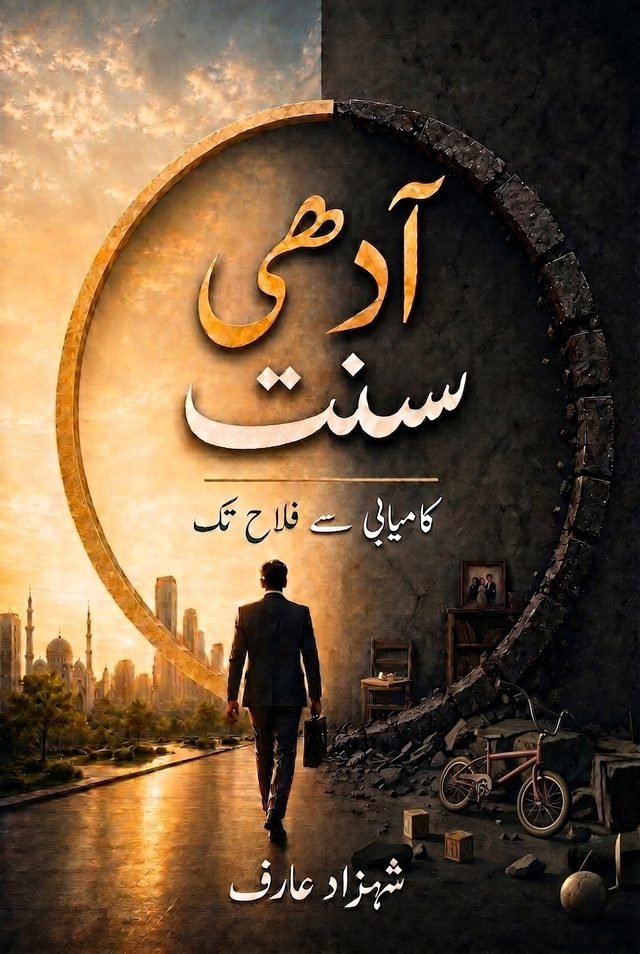
Measured by our own definitions of good and bad, she would never have entered Paradise. So it is not our place to pass judgement on anyone. However sinful someone looks to us, whether Allah ﷻ forgives them is known to Him alone. In my book Aadhi Sunnat I put it this way: we are not to give up our good deeds; we are to give up the thought that follows them, that we are better than others.
There is a second blind spot here too. The good deeds we think are small, we ignore. And the small sins we do not even count as sins, like wasting our time on things that do not concern us, are the very things that become the biggest obstacle to our being accepted in Allah’s ﷻ court.
Balance, and the need for a true guide
So the thing to sit with is this: what Allah ﷻ told us to do, we do; what He told us to stop, we stop. However much we long to pray, we cannot add a third sajdah (prostration) where there are two, or pray six fard prayers a day instead of five. We do exactly what is commanded, and stop exactly where we are stopped, without tipping the balance either way.
This is where we need a true Shaykh, a guide who shows us where our balance should rest.
Here is one thing for today. The next time someone in need comes to your door, do not send him on to the next one. Give what you can with your own hand, even if it is little.
May Allah ﷻ deal with us by His grace and not by His justice, and keep us from sitting in judgement over others. Ameen.